Savings accounts & ISAs
Links marked * are commercial or go to our partner sites, which share our operator. Third-party companies may pay us commission. How we make money.
In short: Saving in the UK in 2026 is unusually rewarding — but the rules around tax-free allowances, ISAs and Premium Bonds change often.
Saving in the UK in 2026 is unusually rewarding — but the rules around tax-free allowances, ISAs and Premium Bonds change often. This guide explains every mainstream UK savings vehicle and how to combine them.
- Published:
- Last updated:
- Editorial responsibility:
- Kaiser Khan, Editorial Director
Your tax-free allowances
Most UK adults can earn a meaningful amount of savings interest tax-free every year through three separate allowances. Use them in this order:
- Personal Savings Allowance
Basic-rate taxpayers earn £1,000 of interest tax-free per year; higher-rate taxpayers £500; additional-rate taxpayers £0.
- Starting Rate for Savings
If your other (non-savings) income is at or below the Personal Allowance (£12,570), you can earn up to £5,000 of savings interest at a 0% starting rate. The £5,000 band is reduced £1-for-£1 by any non-savings income above the Personal Allowance, so by the time non-savings income reaches £17,570 the starting rate is gone.
- ISA allowance
£20,000 per tax year across all your ISAs combined. Interest, dividends and gains inside an ISA are entirely tax-free, forever.
Cash ISAs vs easy-access savings
If your interest will stay under your Personal Savings Allowance, a standard easy-access account usually pays more than a Cash ISA at the same risk level.
If you're a higher-rate taxpayer, or your savings pot will grow to a level where interest exceeds the allowance, a Cash ISA wins because the tax shelter compounds year after year.
Lifetime ISA (LISA)
Open between ages 18 and 39. Pay in up to £4,000 a year (part of your £20,000 ISA allowance). The government adds a 25% bonus — up to £1,000 a year.
You can use the LISA, including the bonus, for two things only: buying your first home worth up to £450,000, or as retirement income from age 60. Withdraw for anything else and a 25% penalty wipes out the bonus and some of your own money.
Fixed-rate bonds
You lock money away for a fixed term — usually one to five years — in exchange for a guaranteed rate. You usually cannot withdraw early. They make sense for money you genuinely won't need before the term ends.
Regular saver accounts
Regular savers pay headline rates (often 6–8%) but only on the small monthly amounts you can pay in — typically £25 to £500/month. The effective annual return is roughly half the headline rate because your money is in the account for an average of six months, not twelve.
Still worth using if you have spare monthly cash flow: pair one with an easy-access account that funds the standing order, and let the rate work on this month's contribution rather than your whole pot.
Help to Save
A government-backed savings account for people receiving Working Tax Credit or Universal Credit (with at least £1 of earned income in the assessment period). Pay in up to £50/month for up to 4 years. The government adds a 50% bonus on the highest balance reached during years 1–2, and another 50% bonus on the growth in years 3–4. Maximum bonus: £1,200.
Open via gov.uk. Withdrawals don't count against the bonus calculation directly but they reduce the highest-balance figure — so think of Help to Save as a 4-year commitment to maximise the return.
Junior ISAs and savings for children
A Junior ISA (JISA) is the standard way to save tax-free for under-18s. The 2025/26 JISA allowance is £9,000, separate from the adult £20,000. Money is locked until the child turns 18, at which point it becomes legally theirs.
Children born between 1 September 2002 and 2 January 2011 have a Child Trust Fund (CTF) instead — these can be transferred to a JISA. Many CTFs were 'lost' when families forgot the provider; HMRC's free CTF tracing service finds them.
Which account, in which order
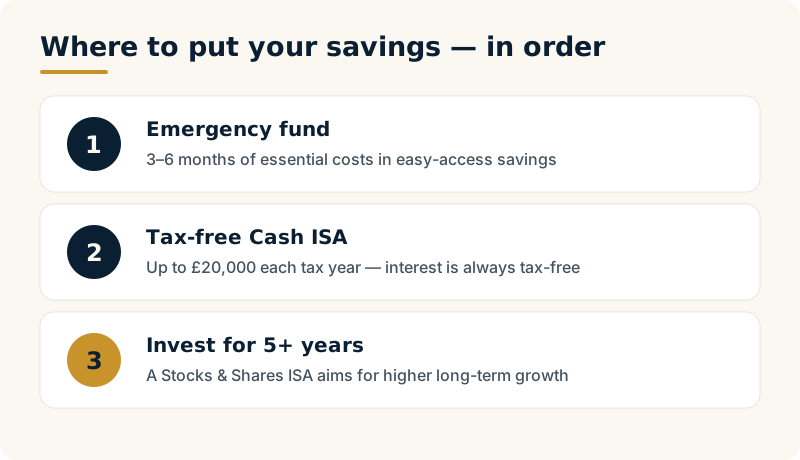
A rough priority order for a typical UK saver:
- 1. Workplace pension match
Capture every penny of employer contribution first — it's usually a 50–100% instant return.
- 2. Emergency fund (3–6 months)
Top-rate easy-access account. This is liquidity, not yield — the goal is for it to be there at 3am when the boiler dies.
- 3. High-interest debt
Anything over ~8% APR (most credit cards, overdrafts, store cards) beats any savings rate after tax.
- 4. LISA (if under 40)
Free 25% top-up for first home or retirement. Even just £1 opened before age 40 keeps the option alive to age 50.
- 5. ISAs and pension top-ups
Cash ISA for short-term goals; Stocks & Shares ISA or pension for anything 5+ years away.
Go deeper on savings accounts
The ISA allowance for 2026/27 explained
Your annual ISA allowance is £20,000 for 2026/27 — the same headline figure that's now applied unchanged since 2017/18. You can split it however you like between Cash, Stocks & Shares, Innovative Finance and Lifetime ISAs, and since April 2024 you can pay into more than one ISA of the same type in the same year. The allowance is per person, not per couple, and it doesn't roll over — anything not used by 5 April is gone.
Read the explainer →How the Personal Savings Allowance works
Basic-rate taxpayers can earn £1,000 of interest tax-free each year, higher-rate £500, and additional-rate £0 — all outside an ISA. The allowance has been frozen at these levels since 2016, while higher savings rates and frozen income-tax thresholds have pushed many more savers over it. Anything inside a Cash ISA or NS&I Premium Bonds is tax-free regardless of the PSA, which is why most savers use up their ISA allowance before relying on the PSA for the rest.
Read the explainer →Cash ISA vs Stocks & Shares ISA — what's the difference?
Both are tax-free wrappers around the same £20,000 annual allowance, but they hold completely different kinds of asset. A Cash ISA is a savings account where the interest is tax-free and the capital is FSCS-protected up to £120,000 per banking group. A Stocks & Shares ISA holds investments — usually funds, ETFs or shares — whose value can fall as well as rise. The right choice depends almost entirely on when you'll need the money.
Read the explainer →Premium Bonds explained: odds, prizes and the tax position
Premium Bonds are a UK savings product run by NS&I that pays no interest — instead, each £1 bond is entered into a monthly prize draw. The capital is 100% backed by HM Treasury and prizes are tax-free, but returns are not guaranteed. This guide explains how the draw works, who they suit, and how they compare with a normal savings account.
Read the explainer →Savings rates explained: easy-access, fixed and regular savers
There is no single best savings account — the right one depends on when you will need the money. This guide explains the three main account types, why rates move, and how tax affects what you actually keep. For live rates, see our offers page or a comparison site once you know which type suits you.
Read the explainer →Lifetime ISA (LISA) explained: bonus, rules and the penalty
The Lifetime ISA (LISA) is a tax-free savings account with a government top-up, designed for two specific goals: buying your first home or saving for later life. The 25% bonus is generous, but the rules are strict and the withdrawal penalty can leave you with less than you put in, so it is important to understand how it works before opening one.
Read the explainer →Fixed-rate vs easy-access savings accounts
Choosing between fixed and easy-access savings is one of the first decisions savers face. Easy-access accounts offer flexibility; fixed-rate bonds reward commitment with better rates. The right choice depends on whether you can genuinely leave the money untouched for the full term.
Read the explainer →Regular saver accounts explained: high rates with strict rules
Regular saver accounts reward disciplined monthly saving with rates far above easy-access accounts. Banks use them to attract new customers or encourage loyalty. The trade-off is tight rules: missed deposits, early withdrawals, or exceeding the monthly cap can slash your rate or close the account.
Read the explainer →The savings ladder strategy: balancing rate and access
A savings ladder is a simple structure, not a product. You divide savings across easy-access and fixed-term accounts with staggered maturity dates. As each fixed bond matures, you reinvest at the best available rate or move money to easy access if you need it. It removes the dilemma of locking everything away or earning almost nothing.
Read the explainer →Cash ISA rule changes from April 2027: what savers need to know
The government has announced ISA reforms taking effect from 6 April 2027. The headline change is a carry-forward rule: if you did not use your full ISA allowance in the previous two tax years, you can add the unused portion to the current year's subscription limit. This rewards consistent ISA savers without increasing the base allowance.
Read the explainer →Junior ISAs explained: saving and investing for children
Junior ISAs are the main tax-free savings wrapper for under-18s in the UK. They replaced Child Trust Funds and come in two types: Cash JISAs and Stocks & Shares JISAs. Once opened, anyone — parents, grandparents, friends — can contribute up to the annual limit, but only parents or guardians can open and manage the account.
Read the explainer →Notice savings accounts explained
UK savers use notice accounts to earn more while keeping some flexibility. They are covered by FSCS when offered by authorised banks. This guide compares notice periods and rates.
Read the explainer →Children's savings accounts explained
UK banks offer accounts from birth, often with gifts or higher rates on small balances. HMRC taxes children's interest above £100 if gifted by parents unless using a JISA. This guide compares options.
Read the explainer →Cash ISA transfer process explained
Savers switch cash ISAs when bonus rates end or better deals appear. Never withdraw to your bank account yourself. This guide walks through the UK transfer process and partial moves.
Read the explainer →Help to Save scheme explained
HMRC runs Help to Save for people on low incomes building emergency funds. Bonuses are tax-free and paid after two and four years. This guide explains eligibility and how it compares with other accounts.
Read the explainer →NS&I savings products explained
NS&I is a government-backed provider popular for security and prize draws. Rates change with market conditions and government funding needs. This guide compares main products for UK savers.
Read the explainer →Fixed-rate bond savings explained
Banks and building societies offer fixed bonds when you can commit lump sums. FSCS protects eligible deposits up to £120,000. This guide explains terms and laddering strategies.
Read the explainer →Best UK savings rates (July 2026)
Savings rates moved with Bank Rate but vary sharply by provider. This hub summarises the product types and what to check — not a personal recommendation. Confirm live rates on the provider site before you open an account.
Read the explainer →Best Cash ISA rates UK (July 2026)
Cash ISAs suit anyone who would otherwise pay tax on savings interest above their Personal Savings Allowance. Transfer rules let you move older ISAs without losing tax-free status — never withdraw to your bank account to switch.
Read the explainer →Sharia-compliant savings in the UK: how Islamic finance works
Islamic finance avoids riba (interest) and excessive uncertainty. UK providers offer current accounts, savings and home finance that comply with Sharia principles while operating under normal UK banking regulation and FSCS protection where applicable.
Read the explainer →Lifetime ISA withdrawal rules: penalties, first home and retirement
The Lifetime ISA's 25% government bonus is attractive, but HMRC's 25% withdrawal charge is not a mirror image of the bonus — it can return less than you paid in. This guide explains authorised withdrawals step by step, the maths of the penalty, and planning around the £450,000 property cap. Read alongside our Lifetime ISA overview; rules are strict and mistakes are costly.
Read the explainer →
Quick answers on savings accounts
Short, direct answers that link back to this guide and our calculators — useful when you need one rule fast.
- What is the best way to save a lump sum in the UK?
- What is a fixed-rate bond savings account?
- Are Premium Bonds worth it?
- What is Sharia-compliant savings?
- What is NS&I?
- What is compound interest?
- What is the NS&I Direct Saver?
- What is an NS&I Green Savings Bond?
Common questions
- Can I have more than one Cash ISA in the same year?
- Yes — since April 2024 you can pay into multiple ISAs of the same type in one tax year, as long as your total contributions across all ISAs stay within £20,000.
- Is my Cash ISA protected?
- Yes. Cash ISAs held with UK-authorised banks and building societies are covered by FSCS up to £120,000 per person per banking group, alongside your other deposits.
- Should I use a Lifetime ISA or a Help to Buy ISA?
- Help to Buy ISAs closed to new applicants in November 2019. If you have one open, you can still pay into it until November 2029, but for most first-time buyers a Lifetime ISA offers a bigger bonus and a higher property price cap.
- What happens to an ISA when someone dies?
- A surviving spouse or civil partner gets an Additional Permitted Subscription (APS) equal to the value of the deceased's ISAs at death — on top of their own £20,000 allowance. This preserves the tax shelter that would otherwise be lost. The estate inherits the ISA value tax-free under the spousal exemption.
- Is a Cash ISA still worth it if savings rates fall?
- Yes if your savings interest is likely to exceed your Personal Savings Allowance (£1,000 basic-rate / £500 higher-rate / £0 additional-rate). The ISA shelter compounds year after year — once you've used the allowance you can't get it back. Most savers should fill the allowance every year that they can spare the cash.
- Are NS&I products safe?
- Yes — NS&I products are backed by HM Treasury, meaning 100% of your money is government-guaranteed regardless of amount. This is a stronger guarantee than the FSCS's £120,000 limit, which is why NS&I is the default home for very large balances that can't be split across enough banks.